
Health Problems and Injuries - B1+ English Vocabulary — Explanation
Talking about health problems and injuries requires more than knowing the names of illnesses. You also need natural verbs for describing symptoms, explaining what happened and talking about treatment or recovery. This B1+ vocabulary lesson introduces useful words and phrases for everyday conversations, appointments and non-specialist health information.
Common health problems and symptoms
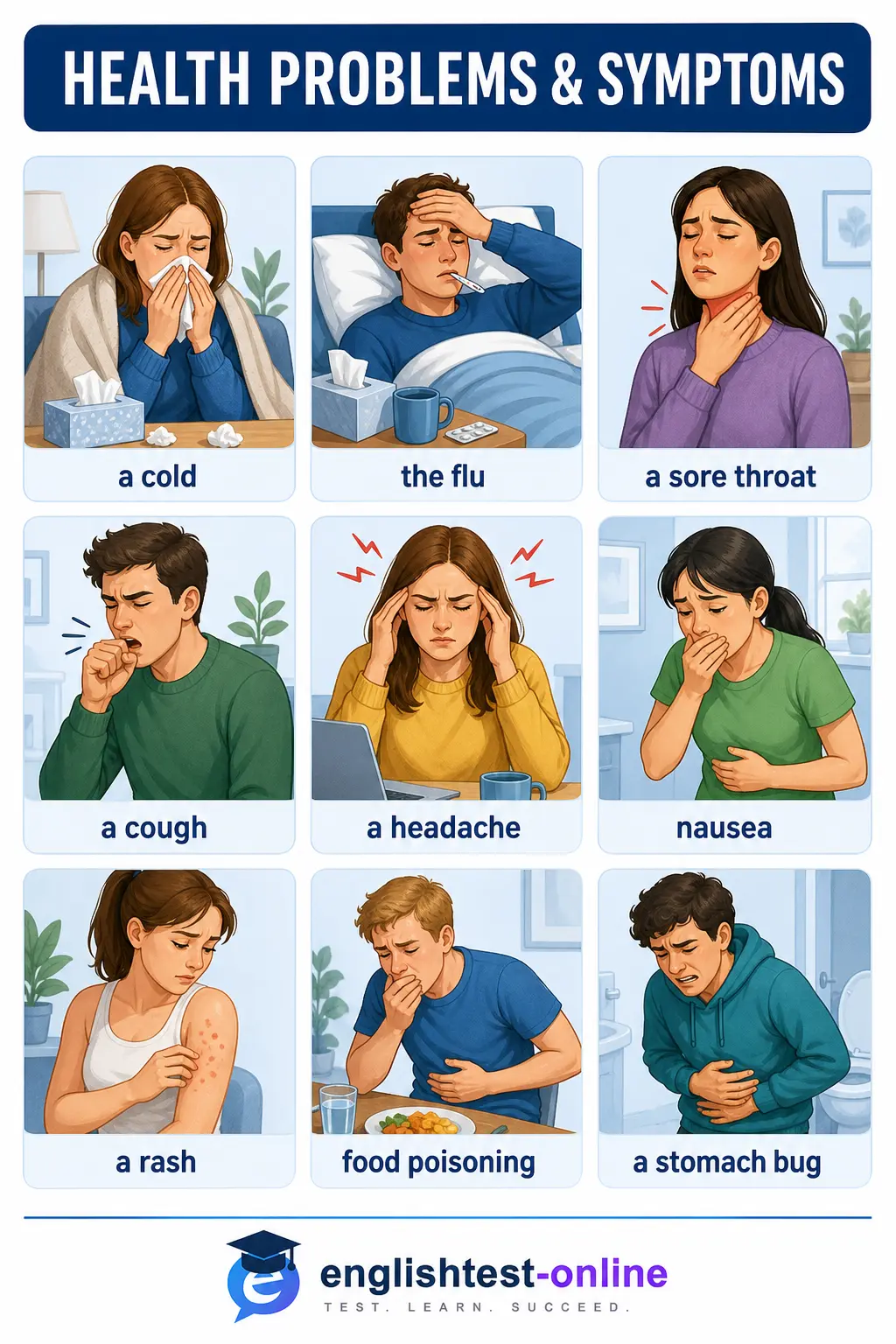
A cold often causes a runny or blocked nose, sneezing and a sore throat. The flu is usually more severe and can cause a fever, body aches and extreme tiredness. A stomach bug is an infection that affects the digestive system, while food poisoning is caused by contaminated food. Both may lead to nausea, vomiting or diarrhoea.
A symptom is a change that suggests you may be ill. Common symptoms include a cough, a headache, dizziness, nausea, a temperature and a rash. A cough that continues for a long time can be described as persistent. Pain can be mild, sharp, dull, severe or throbbing. These adjectives help you explain how the pain feels.
Using -ache and sore
We use -ache in words such as headache, toothache, backache and stomach ache. Use sore when a body part is painful or uncomfortable: a sore throat, sore muscles or a sore shoulder. Compare I have a backache with My back is sore.
Injuries
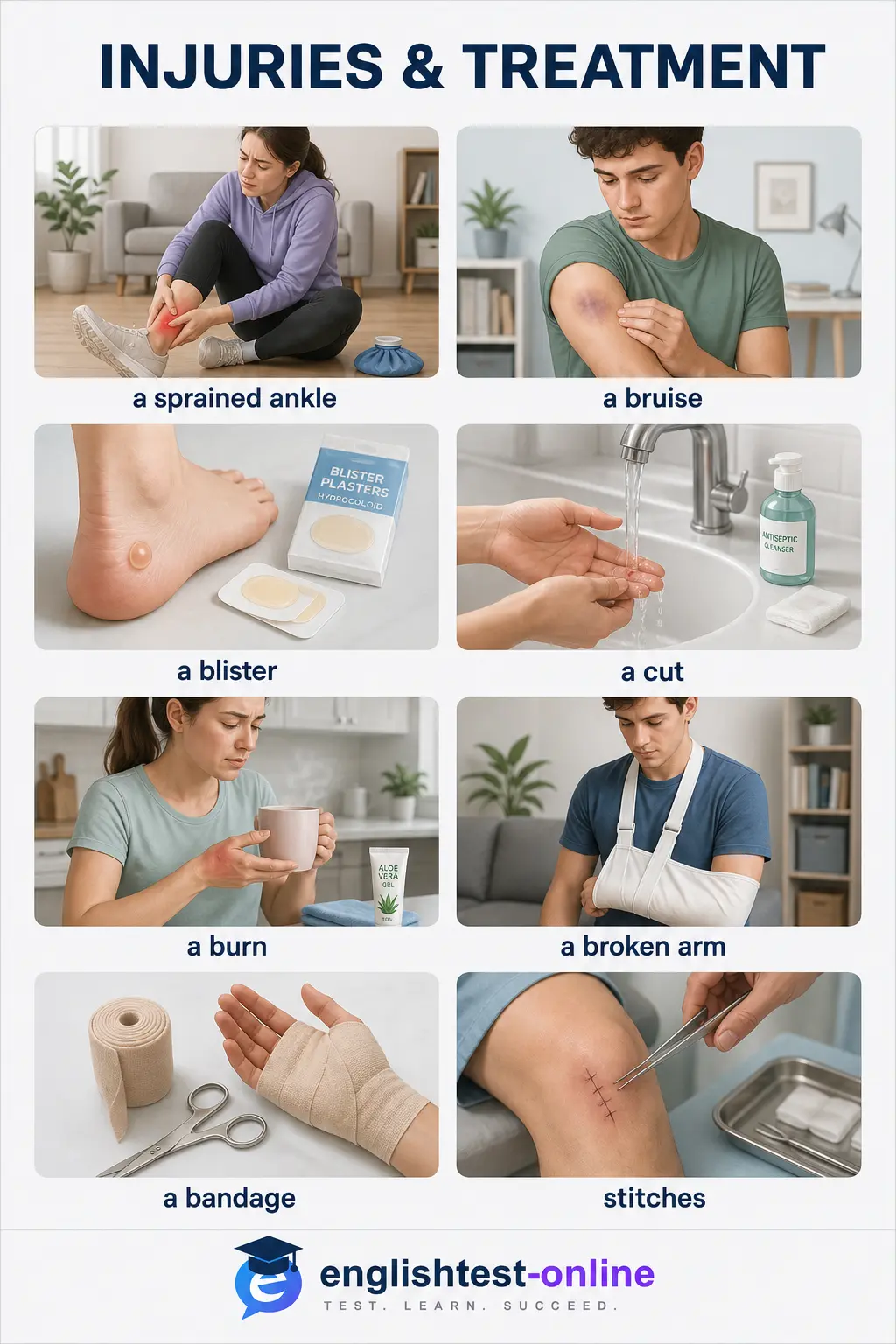
A sprain happens when a ligament around a joint is stretched or damaged. Someone who turns their ankle while running may have a sprained ankle. A bruise is a coloured mark under the skin after a knock or fall. A blister is a small pocket of fluid, often caused by shoes rubbing against the skin.
A cut breaks the skin, whereas a wound is a broader term for damage to the body. A minor burn may make the skin red and painful. A more serious accident can result in a fracture or broken bone. Injured areas may become swollen, tender or difficult to move.
Health problems: verb phrases
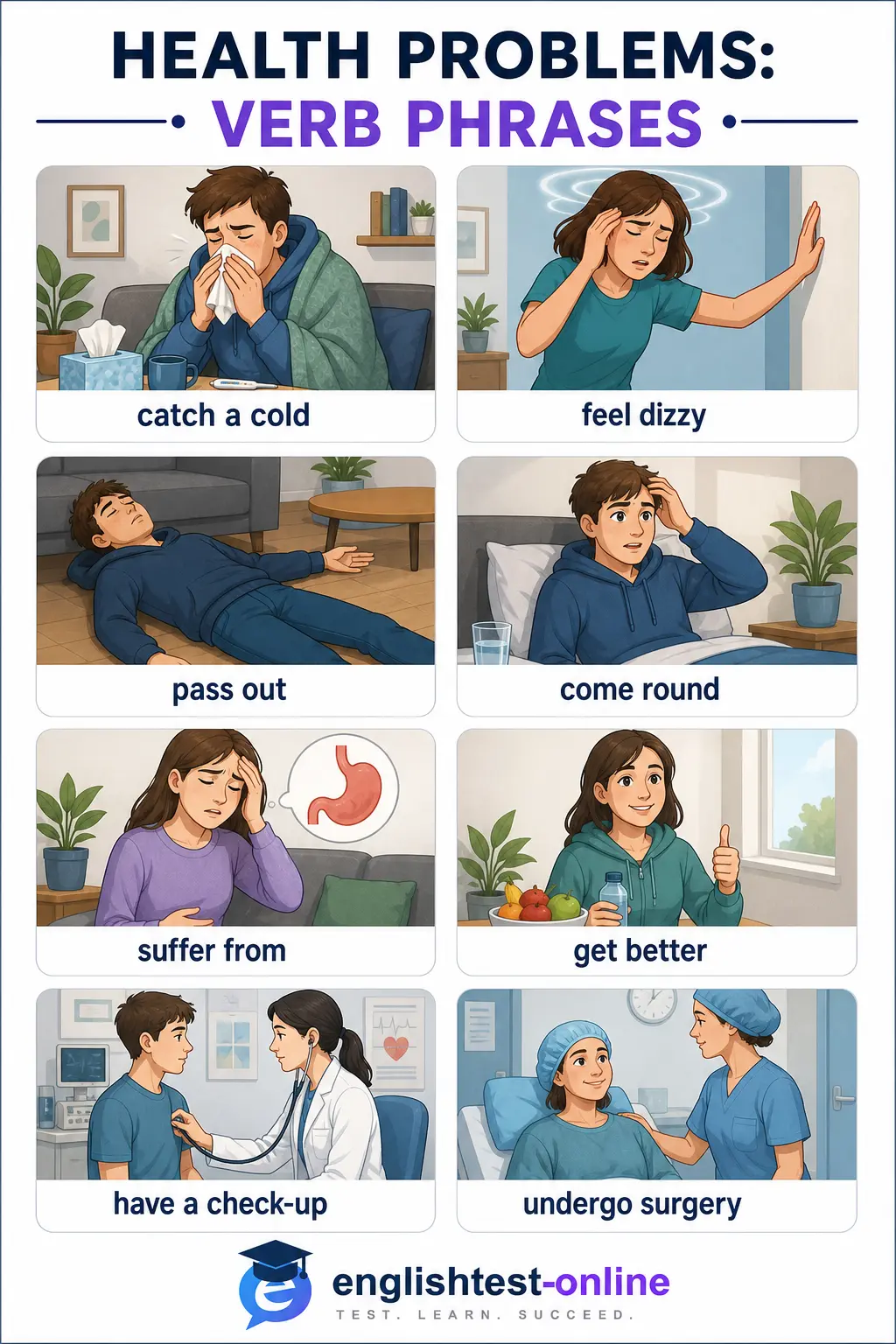
- catch a cold: become infected with a cold
- come down with something: begin to become ill
- suffer from something: experience an illness or condition
- feel dizzy: feel as if you or the room are spinning
- pass out: lose consciousness
- come round: become conscious again
- throw up: vomit; this is informal
- get over something: recover from an illness or difficult experience
- get better: improve after being ill or injured
- make a full recovery: return completely to good health
Notice the prepositions: you suffer from asthma, recover from an operation and get over the flu. We say She fainted or She passed out, then She came round.
Appointments, treatment and recovery
You can make an appointment, see a doctor or have a check-up. A healthcare professional may examine you, diagnose a condition, recommend treatment or give you a prescription. A person may take medicine, have stitches, wear a cast, undergo surgery or receive physiotherapy, depending on the problem.
Treat refers to dealing with an illness or injury; cure means ending a disease or condition completely. A treatment can ease or relieve symptoms even when it does not cure the underlying condition. During recovery, swelling may go down, a wound may heal, and the patient may gradually regain strength.
Useful collocations
- have a high fever, develop a rash, lose your voice
- ease the pain, relieve the symptoms, reduce swelling
- prescribe medicine, follow medical advice, attend a check-up
- sustain an injury, sprain your wrist, break a bone
- recover from surgery, make progress, make a full recovery
Explaining a problem clearly
A clear description answers four questions: Where does it hurt? What does it feel like? When did it start? Is it getting better or worse? For example: I have had a sharp pain in my left shoulder since yesterday. It gets worse when I lift my arm. The present perfect is common with for and since: I have had this cough for three days.
Common mistakes
- Say I have a headache, not I am headache.
- Say She caught a cold, not She took a cold.
- Say He had surgery or underwent surgery; surgery is normally uncountable in this meaning.
- Use injured for a person or body part and damaged mainly for objects.
- Use medicine for a substance used as treatment and medical as an adjective.
Use the four exercises to practise health nouns, injury vocabulary, verb phrases and treatment collocations in realistic B1+ contexts.
Comments (0)
Log in to join the discussion.