
The Weather and Natural Disasters - B1+ English Vocabulary — Explanation
Weather shapes our plans, journeys and conversations, while natural disasters often dominate news reports. In this B1+ vocabulary lesson, you will learn precise words for weather conditions, temperature, precipitation and natural hazards. You will also practise the verbs and collocations that make your English sound natural.
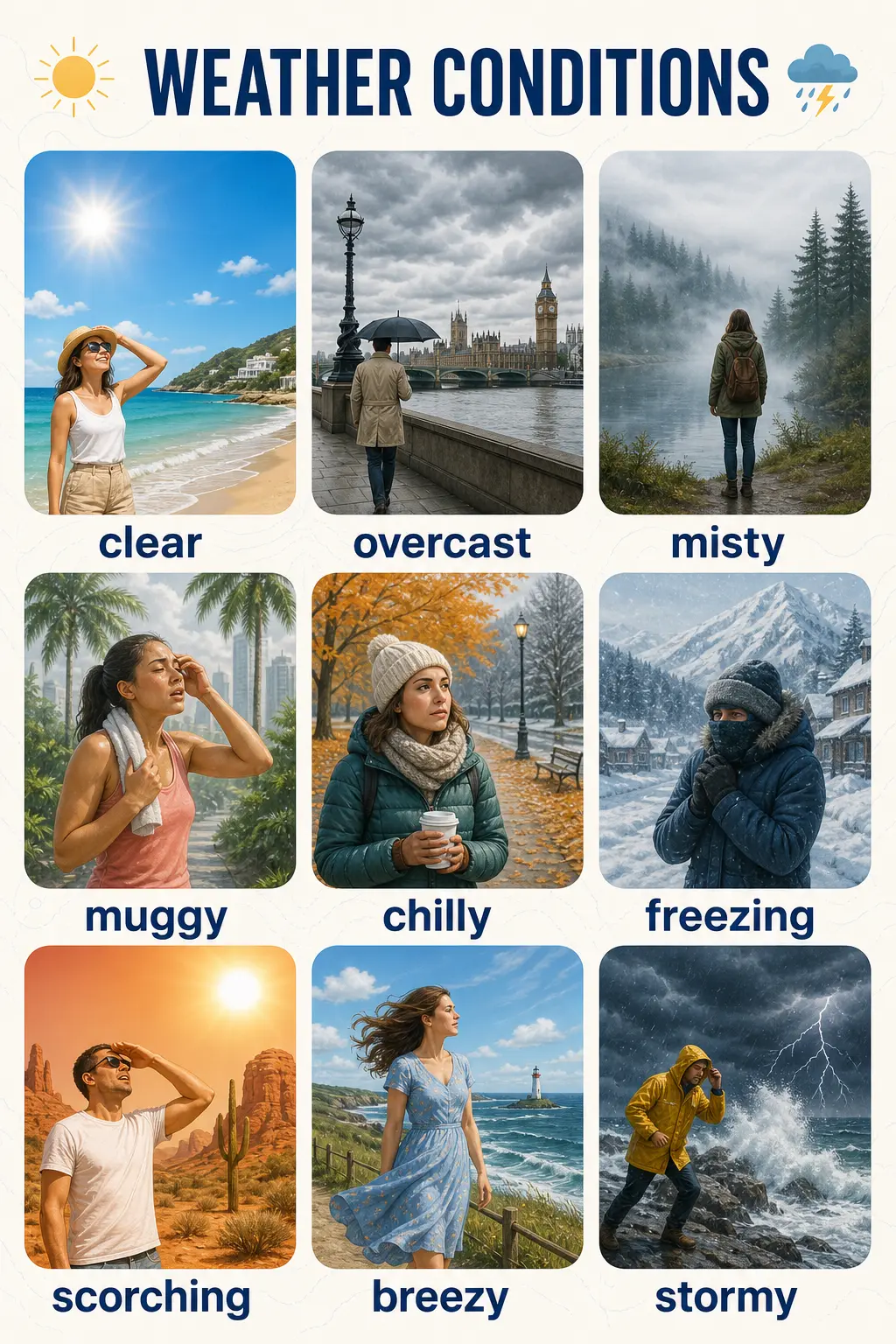
Weather conditions and temperature
When the sun is visible and there are few clouds, the sky is clear. A sky completely covered by clouds is overcast. If tiny drops of water reduce visibility near the ground, the weather is misty; thicker fog makes it much harder to see. Hazy conditions are slightly different because dust, smoke or heat can make the air look unclear.
Temperature words express more than simply hot or cold. A pleasantly warm day can be mild, while a slightly cold day is chilly or nippy. Extremely cold weather is freezing, and extremely hot weather is scorching. When warm air contains a lot of moisture, it is humid. If that heat feels unpleasant and sticky, we often call it muggy.
Wind, rain and storms
A breeze is a light, pleasant wind, so a breezy day is windy without being dangerous. Stronger winds may bring gusts, which are sudden short bursts of wind. A gale is much more powerful and can disrupt travel.
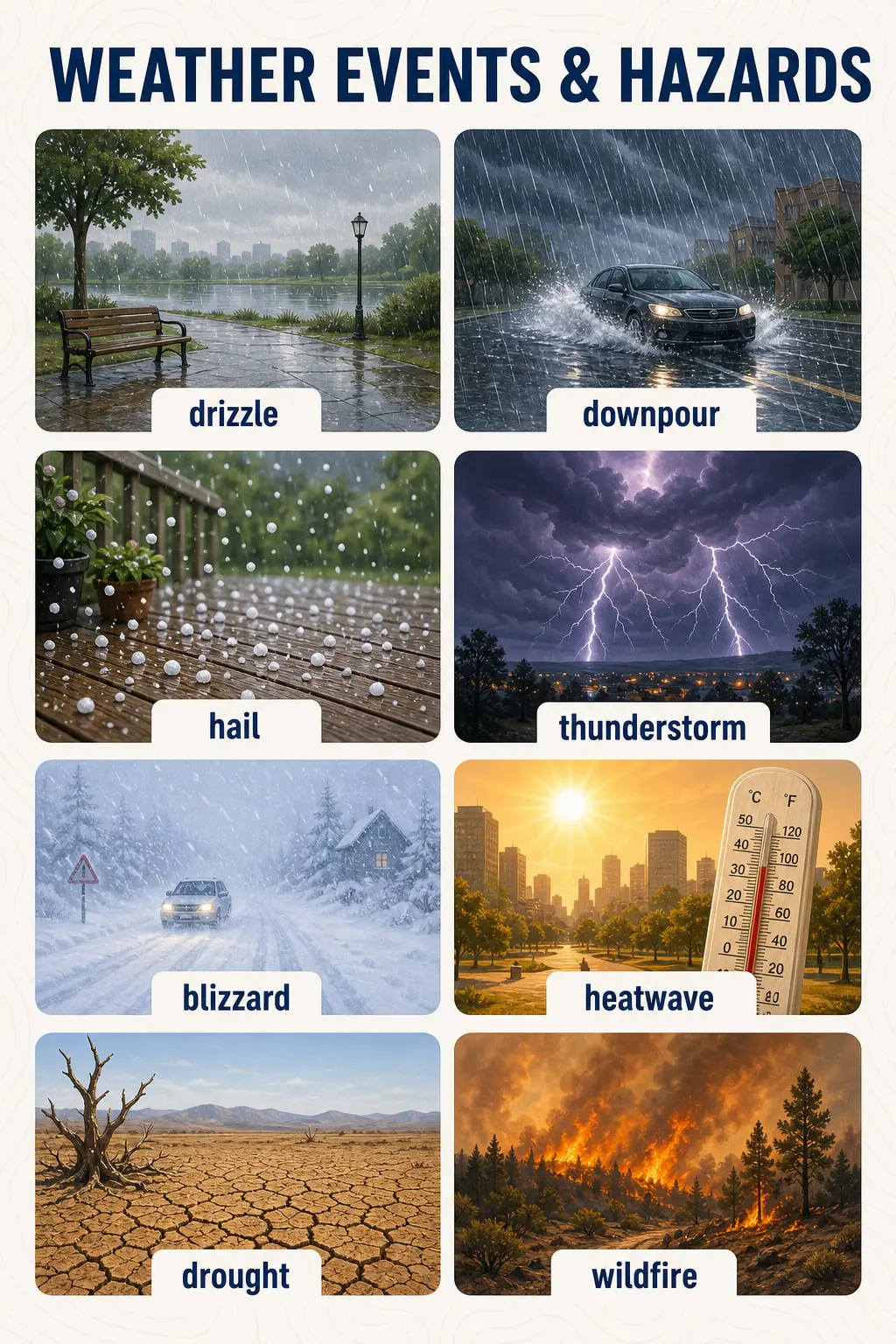
Light rain is called drizzle, while a shower is a short period of rain that may begin and end quickly. A downpour is sudden, very heavy rain. During a thunderstorm, you may see lightning and hear thunder. Frozen balls falling from storm clouds are called hail. A blizzard combines heavy snow, strong wind and very poor visibility.
Useful rain and storm collocations
- heavy rain, torrential rain and driving rain
- a flash of lightning and a clap of thunder
- a storm approaches, breaks, hits or passes
- strong winds, powerful gusts and poor visibility
Extreme weather and natural disasters
A heatwave is a long spell of unusually hot weather. If an area receives very little rain for months, it may experience a drought. Dry vegetation can then help a wildfire spread rapidly across forests or grassland.
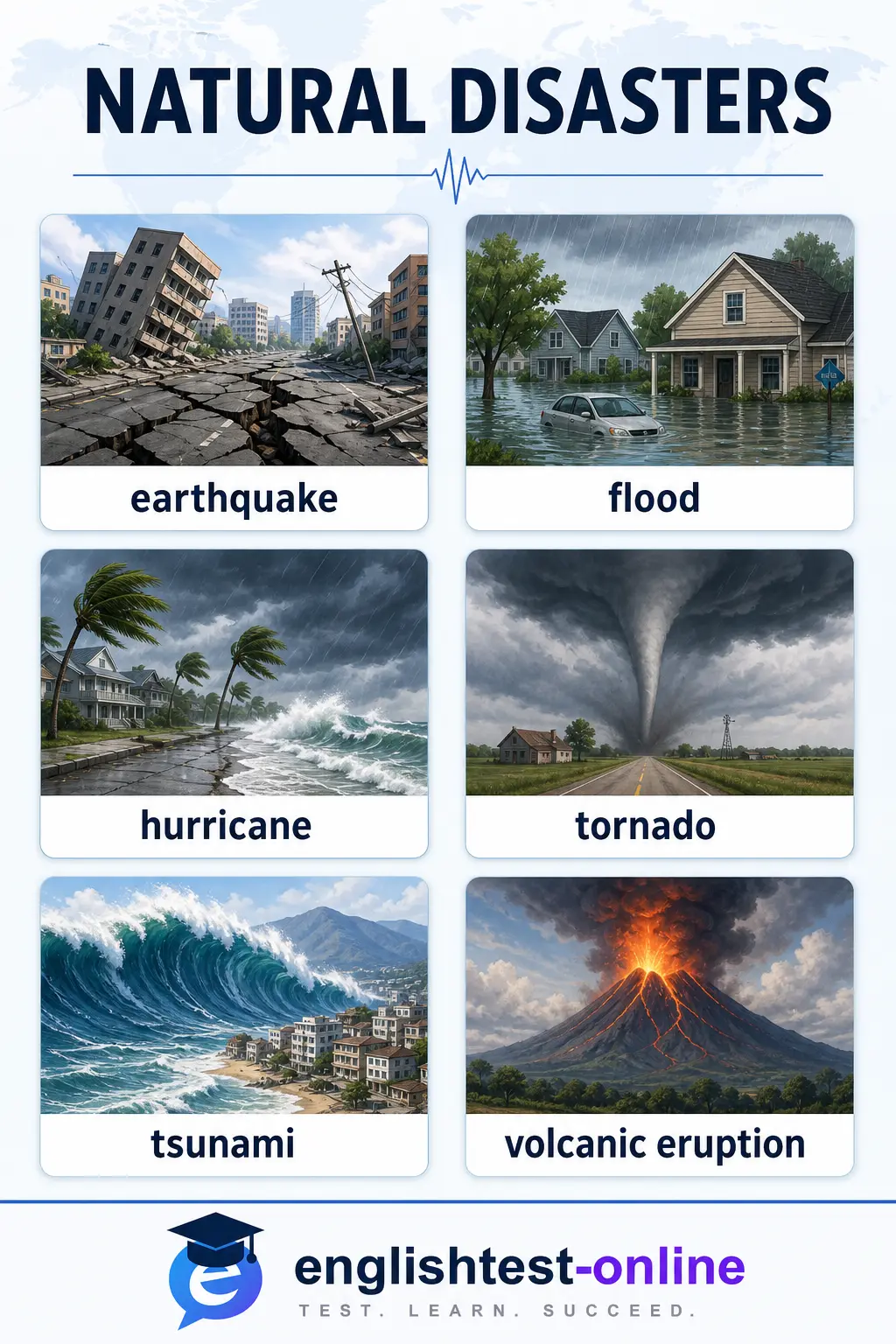
An earthquake is a sudden movement of the ground. A flood happens when water covers land that is normally dry. A tornado is a violently rotating column of air, whereas a hurricane is a huge tropical storm system that forms over warm ocean water. A tsunami is a series of powerful sea waves, often triggered by an underwater earthquake. A volcanic eruption releases lava, ash and gases from a volcano.
Talking about causes, effects and emergency action
Natural hazards do not all use the same verbs. An earthquake can strike a region, a hurricane can make landfall, a river can burst its banks, a volcano can erupt, and a wildfire can spread. People may be evacuated from an area before danger arrives. Emergency services then rescue people, restore power and provide temporary shelter.
In news reports, damage is normally uncountable: say serious damage, not damages. Use destroy when something is ruined completely and damage when it can still exist or be repaired. A disaster may cause damage, leave homes without electricity or force residents to leave.
Weather forecast language
Forecasts often use probability. There is a chance of showers means rain is possible. Rain is likely expresses a stronger probability, while it will remain dry predicts no rain. Temperatures can rise, fall, reach 30°C or drop below zero. A period of weather is often called a spell: a cold spell, a dry spell or a spell of wet weather.
Common vocabulary mistakes
- Weather is uncountable: say bad weather, not a bad weather.
- Lightning is the flash; thunder is the sound.
- Climate describes long-term patterns; weather describes current conditions.
- A place is flooded, but the event is a flood.
- Say the temperature is 25 degrees, not there are 25 degrees.
Review the images, notice the common word partnerships, and then complete all four exercises. The questions move from choosing definitions to using weather and disaster vocabulary in realistic forecasts and reports.
Comments (0)
Log in to join the discussion.